Budgie | Your budget buddy.
My Roles:
Research, Design, Prototyping
Locations:
- London, UK
- Johannesburg, South Africa
Tools:


Project Overview:
The cost of living has risen drastically in the UK, and is still rising. It’s becoming harder to save while still being able to eat well and get quality products. I wanted to create an application that might be able to help plan your grocery shopping while keeping an eye on your budget and possibly suggest great recipes.
Budgie helps create shopping lists while informing you where you can get specific products at the best price.
Discovery.
Surveys & Interviews
I needed to get a real idea of how people across the board do shopping. I wanted to know how people shop, why people shop, what people are shopping for and where people do their shopping, I needed to do surveys. I interviewed 16 people from different backgrounds, age groups and ethnicities to get the big picture. I also conducted a number of online surveys to get more quantitive data.
Competitor Analysis
I wanted to see if there were similar solutions out there, what they were doing and if there were how we might be able to improve or offer a better way to shop and save. There are two main competitors who do pretty much the same thing. Although they lack in a few potentially handy features.
Key Findings
- Not surprisingly, only around 50% of shoppers actively budget
- Most people create lists when grocery shopping
- Most people will actually spend a little more for particular quality items
- People might also pay less for no name brands for particular products
- Competitors have no budgeting feature
- Competitors have no recipe suggestions
- Competitors have no store suggestions
Definition.
To find great solutions, we need to properly understand the problems, fears, and goals that regular grocery shoppers have day-to-day. With affinity maps I can explore the feedback we gathered and properly form a problem statement . After several iterations, I came to some eye-opening conclusions. Here are some of the things we discovered:

 Problem Statement.
Most shoppers are finding it harder to budget and save in this economic climate but still want quality products for some things and are willing to pay for these. At the same time most shoppers are willing to pay a little less for some items and don’ mind these certain items being of a no-name brand or cheaper.
Ideation.
Journey Mapping
After prioritising some features, working off our competitor analysis and using our user research I could map out a desirable user journey, adding some handy features that we feel will make shopping and saving easier and more intuitive.

Design.
Lo-fi prototyping
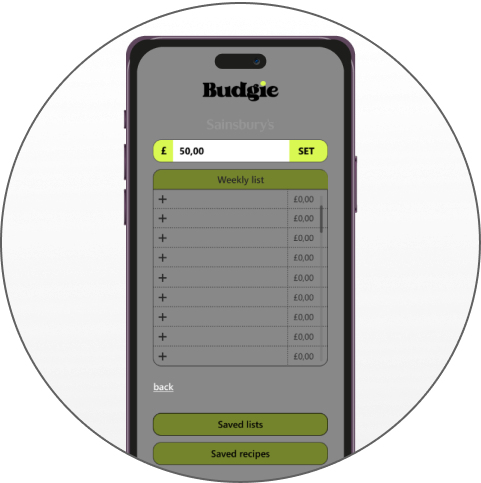
With some new feature ideas lets figure out how we can add these in an intuitive design, I created some lo-fi prototypes to get an idea how these features might work together.

Hi-fi prototyping and design
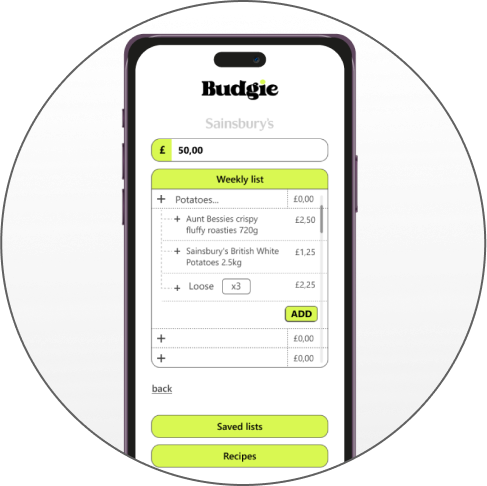
Once I had decided on a layout and selected a colour scheme and typography, it was time to bring it all together into a high-fidelity prototype with added interactivity. This then allowed me to conduct user testing to see how people interacted with the design.
